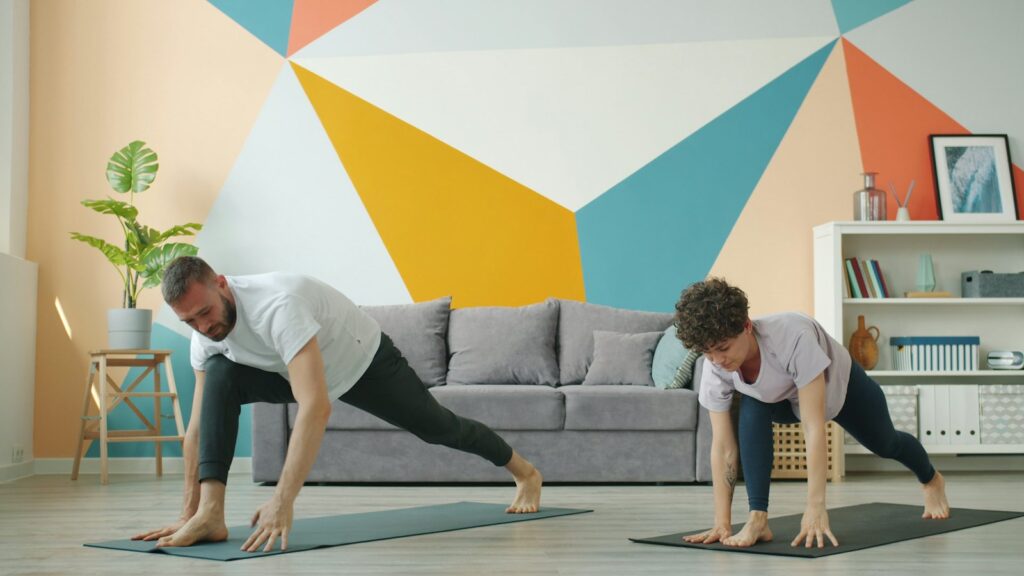
Mornings set the tone. If the first thing your body does is shuffle from bed to kettle to desk, it can stay in that slightly stiff, half-awake mode for hours. A short mobility sequence is a calm way to change that, and it takes about as long as waiting for coffee to brew.
The routine below runs for ten minutes and moves gently from the floor to standing. It is designed for ordinary mornings: no warm-up required, no equipment beyond a mat or rug, and nothing that demands you feel flexible. Think of it as switching the lights on, one room at a time.
Mobility first, intensity later
Mobility work is about moving joints through a comfortable range with control, rather than holding deep stretches for a long time. That makes it a good fit for the morning, when many people feel tighter than they do later in the day. The movements here are slow and rhythmic. You ease into each position, breathe, and come back out again, gradually exploring a little more range as you warm up.
Because the aim is gentle movement, you should finish the ten minutes feeling looser and more awake, not tired. If anything feels like effort, make it smaller.
What you need
- A mat, rug or towel on a non-slip floor.
- Comfortable clothes you can move in. Pyjamas count.
- A clock or timer you can glance at, or simply count slow breaths.
- A glass of water nearby for when you finish.
The 10-minute sequence
Each step has a suggested duration. Treat these as guides rather than rules. If you want more time on one move and less on another, that is fine.
-
0:00 – 1:00
Knee hugs on your back
Lie on your back and draw both knees toward your chest, holding behind the thighs or over the shins. Rock slowly from side to side, letting your lower back settle into the floor. Breathe deeply and let your shoulders relax.
-
1:00 – 2:00
Windscreen wipers
Place your feet flat on the floor a little wider than your hips, arms out to the sides. Let both knees fall slowly to the right, then bring them back through centre and over to the left. Move with your breath and keep both shoulders resting on the floor.
-
2:00 – 3:00
Child’s pose to tabletop
Roll onto your hands and knees. Sit your hips back toward your heels with your arms stretched forward, then slowly rock forward into tabletop, shoulders over wrists. Flow between the two positions for a minute, pausing for a breath at each end.
-
3:00 – 5:00
Thread the needle
From tabletop, slide your right arm under your body to the left, palm up, and lower your right shoulder and ear toward the floor. Rest there for a few breaths, then reach the right arm up toward the ceiling to open the chest. Repeat a few times, then switch sides.
-
5:00 – 7:00
Low lunge with an overhead reach
Step your right foot forward between your hands and lower your left knee onto the mat, padding it with a folded towel if needed. Lift your chest and reach both arms overhead as you shift your hips slightly forward. Hold for a few breaths, then switch legs.
-
7:00 – 8:00
Seated side reach
Come to sit with your legs wide in a comfortable straddle, or cross-legged if that suits you better. Reach one arm up and over toward the opposite side, letting the other hand rest on the floor. Alternate sides slowly, breathing into the side ribs.
-
8:00 – 10:00
Standing warrior two with arm circles
Stand up and step your feet wide. Turn your right toes out, bend your right knee a little, and extend your arms long to each side. Hold for a few breaths, then make slow arm circles before switching sides. Finish standing tall with three deep breaths.

Adjusting it to your morning
The sequence is a starting point. A few simple variations keep it useful on different kinds of days:
- Short on time: do steps one, three and seven for a three-minute version.
- Feeling stiff: stay on the floor longer and make each movement smaller.
- Knees complaining: skip the kneeling moves and do the lunge standing with a hand on a wall.
- Want more: repeat the whole sequence on weekends, or add a second round of your favourite step.
The most useful morning routine is the one you can do half-asleep. Keep it simple enough that you never need to think about what comes next.
Making the morning routine automatic
A sequence only helps if you actually do it. The easiest way to make it stick is to attach it to something you already do every morning without fail. Roll out your mat right after you switch on the kettle, or straight after you brush your teeth. Leave the mat in the same place each night so there is nothing to set up.
It also helps to keep the first week deliberately easy. If ten minutes feels like a lot, start with the three-minute version and add steps once the habit is in place. Showing up every day matters more early on than doing the full routine.
Some people find it easier to follow along than to remember an order. Stretching apps can play a sequence with timers and visual guidance, so you just press start. Bend, a third-party app for iPhone and Android, has short morning routines and lets you choose target areas or build your own routine. A free trial is available; check the current pricing in the app store listing.
A quick health note
This sequence is general information, not medical advice. If you are pregnant, recovering from an injury, managing a health condition or new to exercise, consult a healthcare professional before starting. Get up slowly from the floor, move within a comfortable range and stop if you feel pain or dizziness.
The takeaway
Ten minutes, seven moves, no equipment: knee hugs, windscreen wipers, child’s pose to tabletop, thread the needle, a low lunge, a seated side reach and a standing warrior two. Pair it with a morning habit you already have, start smaller than you think you need to, and let the routine become part of how your day begins.