Evenings have a way of filling up. Dinner, messages, one more episode, and suddenly it is late and you head to bed still carrying the day in your shoulders. A short, slow stretch before bed can act as a clear signal that the busy part of the day is over.
This wind-down routine is deliberately unhurried. It uses positions you can do on the floor or even on your bed, takes around ten minutes, and favours long, easy breaths over effort.
Why an evening routine feels different
A morning routine is usually about waking up and getting moving. An evening routine has the opposite goal: slowing down. That changes how you approach it. Movements are smaller, holds are longer and the whole session is quieter.
Many people find that a consistent pre-bed ritual, whether it is reading, a warm drink or a few stretches, makes the transition from evening to night feel smoother. Stretching simply adds some gentle movement to that ritual.
Set the scene
- Dim the lights or switch to a lamp.
- Put your phone on the other side of the room, or face down.
- Wear something soft and loose.
- Have a pillow or folded blanket within reach.
The ten-minute wind-down
-
0:00 – 1:30
Seated breathing with shoulder drops
Sit cross-legged on the floor or the edge of your bed. Breathe in and lift your shoulders gently toward your ears; breathe out and let them drop. Repeat slowly five or six times, then rest your hands on your knees and take a few quiet breaths.
-
1:30 – 3:00
Overhead reach and side lean
Still seated, reach both arms overhead and hold one wrist with the other hand. Lean gently to one side for three breaths, return to centre, and lean to the other side. Lower your arms slowly.
-
3:00 – 4:30
Child’s pose
Kneel, bring your big toes together and sit back toward your heels, letting your chest lower toward the floor and your arms rest forward or alongside you. Place a pillow under your chest or forehead if that feels more comfortable. Stay for several long breaths.
-
4:30 – 6:00
Gentle supine twist
Lie on your back, draw your knees toward your chest, then let them fall slowly to one side while your arms rest out wide. Turn your head the other way if comfortable. Hold for a few breaths, then switch sides.
-
6:00 – 8:00
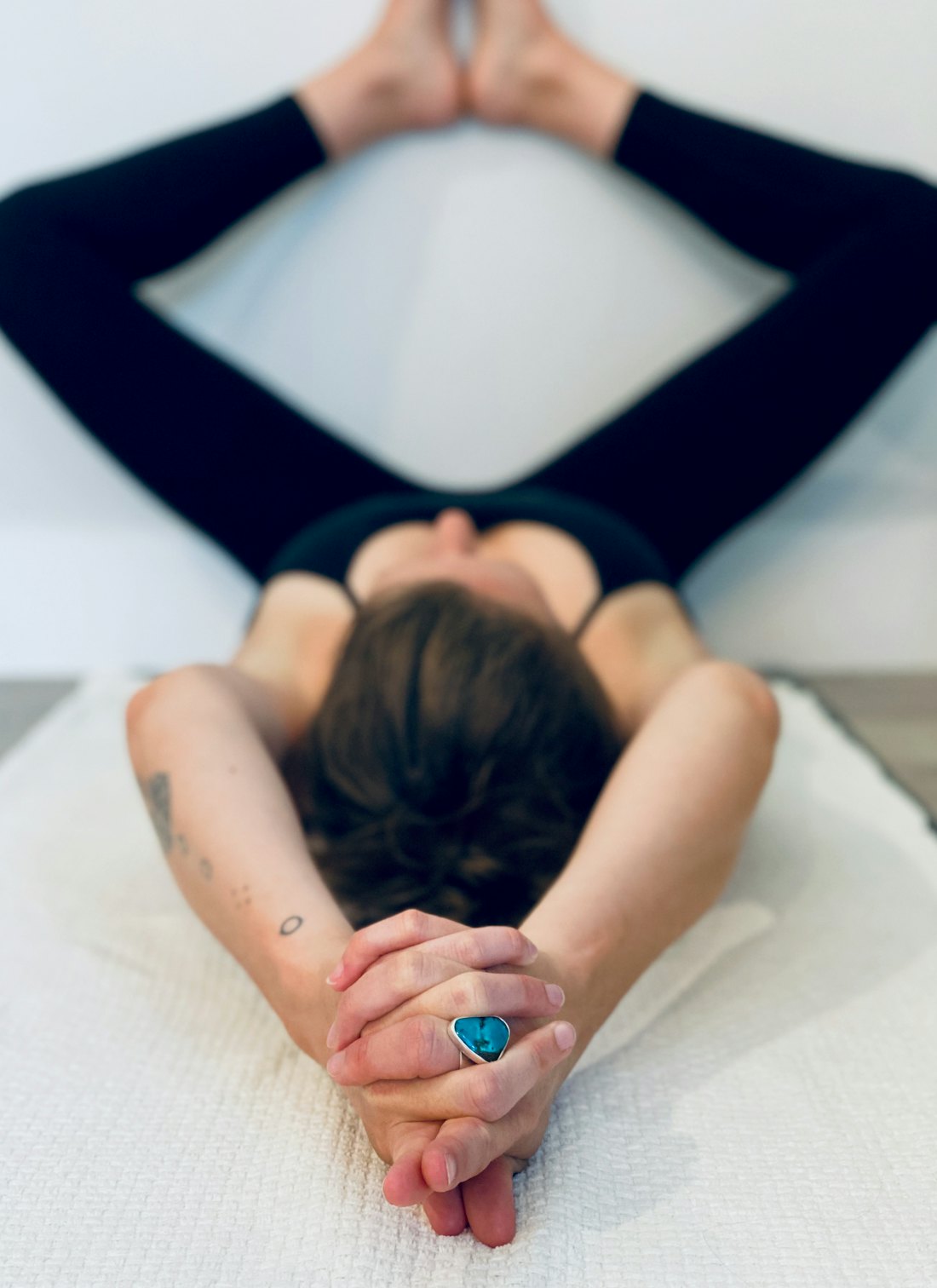
Legs up the wall
Sit sideways next to a wall or headboard, then swing your legs up as you lie back, so your legs rest against the wall. Shuffle your hips as close as is comfortable. Let your arms relax and simply breathe.
-
8:00 – 10:00
Resting on your back
Bring your legs down and lie flat, or with your knees bent and feet on the floor. Let your body feel heavy. Take ten slow breaths, making each out-breath a little longer than the in-breath.
An evening stretch is not about getting anything done. It is a few minutes in which nothing else needs doing.
Making it a nightly habit
The trick with evening routines is protecting them from the rest of the evening. A few approaches that help:
- Pick a cue: stretch straight after brushing your teeth, so one habit leads into the next.
- Keep it visible: leave a mat or blanket rolled out where you will see it.
- Shorten it on late nights: child’s pose and legs up the wall alone take only a few minutes.
- Keep screens out of it: if you follow a routine on your phone, set it up first, then put the phone down.
What to skip before bed
Save energetic movements, long holds at the edge of your range and anything that gets your heart rate up for earlier in the day. The goal here is calm.
A quick health note
This post is general information, not medical advice. If you have an injury, a health condition, or concerns about your sleep, consult a healthcare professional. Some positions, such as lying with your legs raised, may not suit everyone; skip anything that feels uncomfortable and stop if you feel pain.
The takeaway
Ten quiet minutes at the end of the day is enough for a calming routine: shoulder drops, a side lean, child’s pose, a gentle twist, legs up the wall and a few slow breaths lying down. Keep it soft, keep it regular, and let it mark the line between your day and your night.