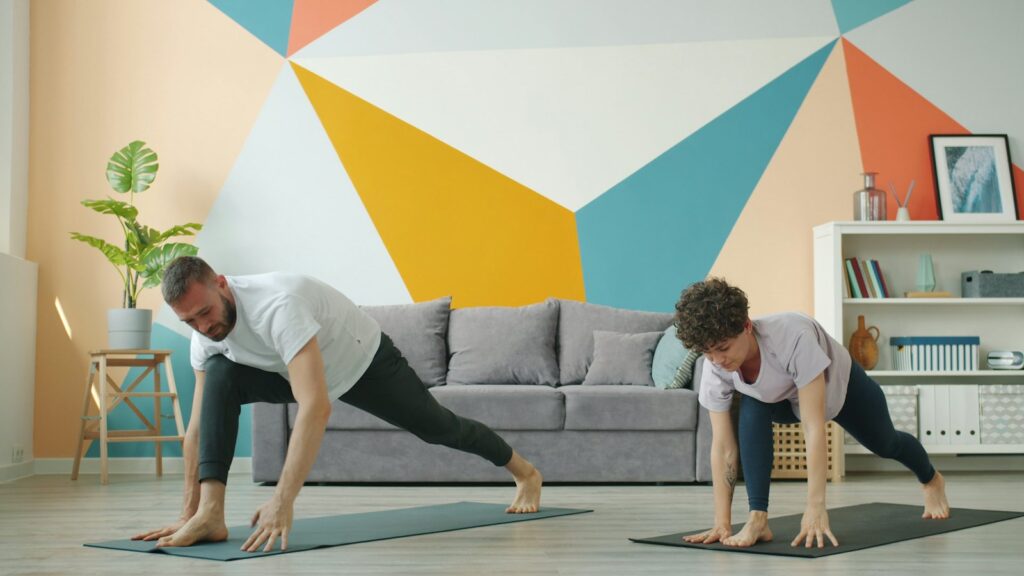
Hours of looking at a screen tend to pull the head forward and round the shoulders. You might not notice it while you work, but by the end of the day the neck and upper back can feel heavy and stiff. A short neck and shoulder reset, done a few times a day, gives that area a regular change of position.
The six moves below take about five minutes in total and can all be done sitting at your desk or standing next to it.
Check your set-up first
Stretching helps most when you are not undoing it the moment you sit back down. Before you start, take thirty seconds to look at how you work:
- Is the top of your screen roughly at eye level?
- Can you rest your forearms comfortably without hunching your shoulders?
- Are your feet flat on the floor or on a footrest?
- If you use a laptop, could you raise it and use a separate keyboard?
Small set-up changes are not a cure-all, but they make it easier to sit comfortably between breaks.
The five-minute reset
1. Chin tucks 45 sec
Sit tall and look straight ahead. Gently draw your chin straight back, as if making a slight double chin, without tilting your head up or down. Hold for a breath or two, release, and repeat eight to ten times. The movement is small; it should feel like lengthening the back of the neck.
2. Ear to shoulder 60 sec
Let your right ear drift toward your right shoulder, keeping both shoulders relaxed and down. For a little more stretch, rest your left hand on the seat of your chair. Hold for four or five slow breaths, bring your head back to centre and switch sides.

3. Gentle look-overs 45 sec
Turn your head slowly to look over your right shoulder, only as far as is comfortable. Pause, return to centre and look over your left shoulder. Repeat four or five times on each side, moving slowly and smoothly.
4. Shoulder rolls and shrugs 45 sec
Lift your shoulders toward your ears, hold for a moment, then let them drop with a long out-breath. Repeat three times, then roll your shoulders backward in slow circles five times and forward five times.
5. Doorway or desk chest opener 60 sec
Stand in a doorway with your forearms resting on the frame at about shoulder height, then step one foot forward until you feel a gentle stretch across the front of your chest. If there is no doorway nearby, clasp your hands behind your back, draw your shoulders gently back and lift your chest. Hold for several breaths.
6. Upper-back hug 45 sec
Wrap your arms around yourself as if giving yourself a hug, hands reaching toward your shoulder blades. Let your head drop gently forward and breathe into the space between your shoulder blades. Swap which arm is on top and repeat.
Your neck spends the day holding up your head. A few minutes of attention is a small way of saying thanks.
How often to reset
A common rhythm is to do the full five-minute reset twice a day and a shorter version in between:
- Late morning: the full reset.
- After lunch: chin tucks and shoulder rolls only.
- Mid-afternoon: the full reset again.
- Any time you notice hunching: one slow shoulder drop and a chin tuck.
Let something else do the remembering
The hardest part of any desk routine is remembering it once you are absorbed in work. A recurring calendar block or a sticky note can help. You could also use a stretching app with reminders; Bend, for example, offers short routines that target the neck and shoulders and lets you set reminders for your working hours. Check the current pricing on the official site.
A quick health note
This post is general information, not medical advice. Neck movements should always be slow and gentle. If you have a neck or shoulder injury, ongoing discomfort, dizziness, numbness or tingling, consult a healthcare professional before trying these stretches, and stop straight away if anything feels painful.
The takeaway
Screen-heavy days ask your neck and shoulders to hold one position for a long time. Give them a regular change: chin tucks, side tilts, look-overs, shoulder rolls, a chest opener and an upper-back hug. Five minutes, a couple of times a day, is a simple way to break up the stillness.