Spend any time reading about stretching and you will run into two terms: dynamic and static. They sound technical, but the idea behind them is simple. One keeps you moving; the other asks you to hold still. Knowing the difference makes it easier to choose the right kind of stretch for the moment you are in.
This explainer covers what each type is, how they feel, when people tend to use them, and how to combine them in an everyday routine.
Static stretching: holding a position
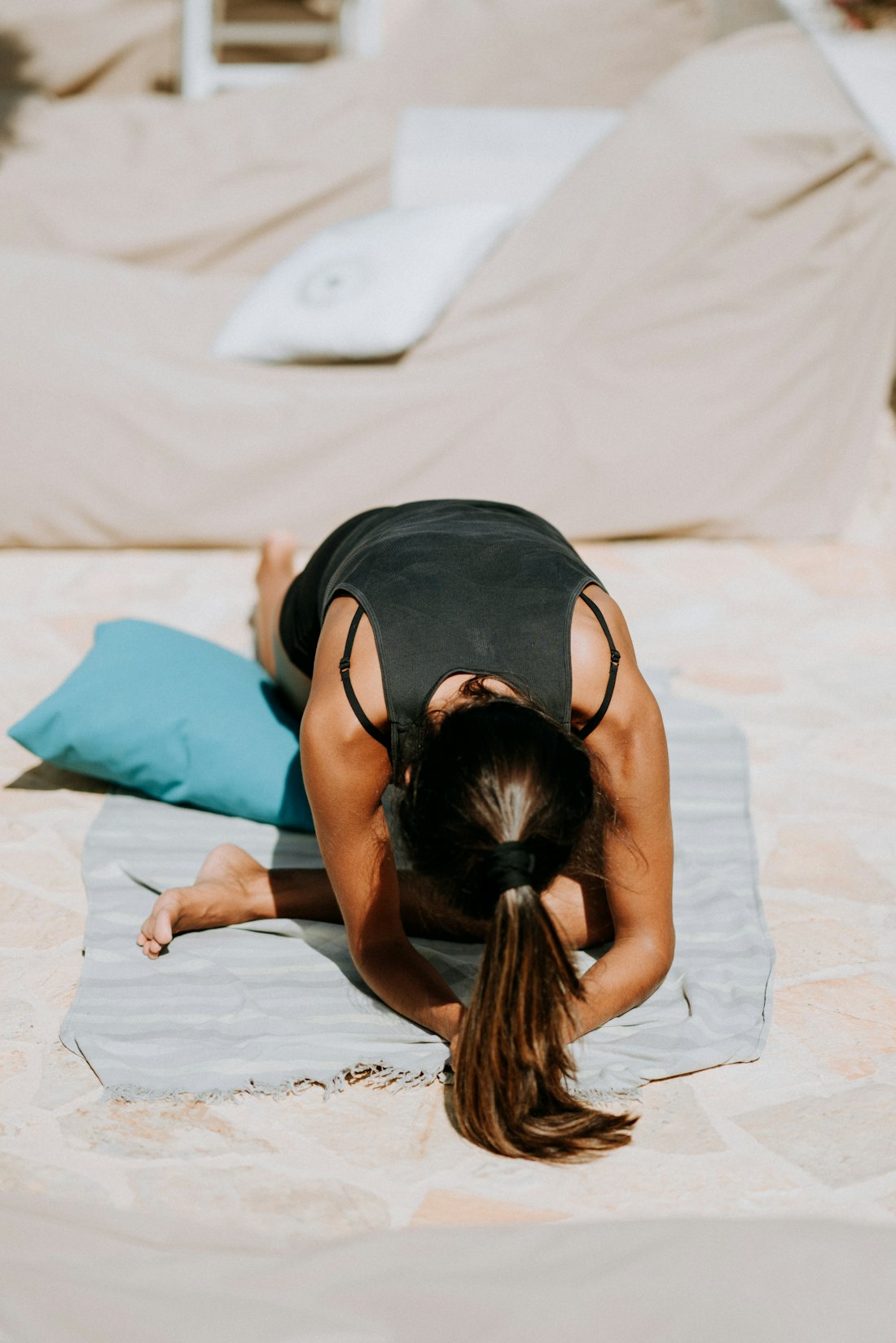
Static stretching is what most people picture when they hear the word “stretch”. You move into a position slowly, find a point of mild tension and stay there for a while, usually for several slow breaths.
What it looks like
- A seated forward fold, reaching toward your feet.
- Child’s pose, resting your chest toward your thighs.
- A standing quad stretch, holding one ankle behind you.
- A figure-four stretch lying on your back.
When people use it
Static stretches suit calmer moments: after a walk or a workout, during a desk break, or as part of an evening wind-down. Because you stay in one place, they pair naturally with slow breathing and tend to feel relaxing.
Dynamic stretching: moving through a range
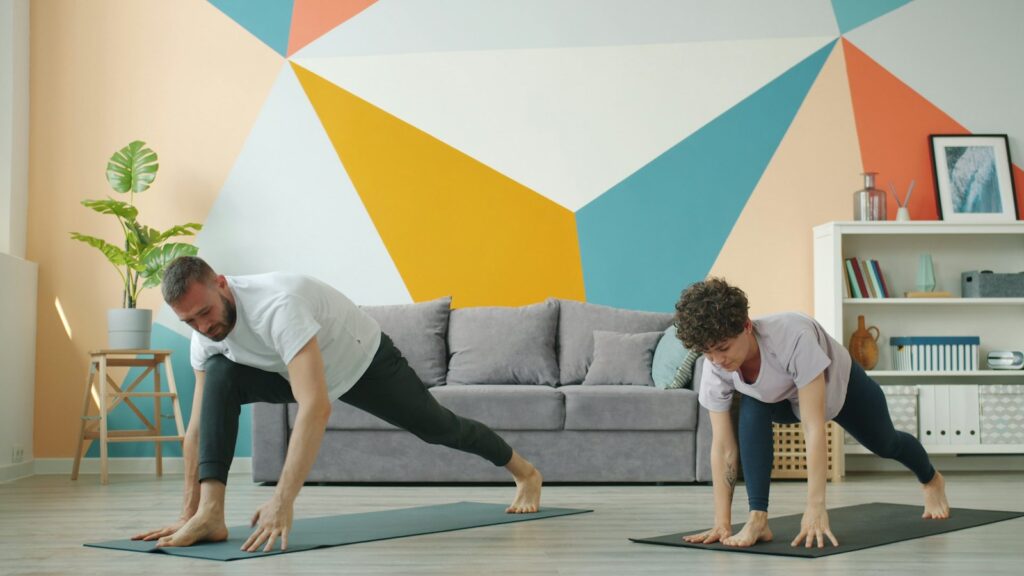
Dynamic stretching uses controlled, repeated movements that take your joints through a comfortable range of motion. Instead of holding a position, you move in and out of it smoothly.
What it looks like
- Arm circles, small to large.
- Leg swings while holding a wall for balance.
- Walking lunges with a gentle twist.
- Hip circles and torso rotations.
When people use it
Dynamic movements are popular as a warm-up before exercise or sport, and first thing in the morning when the body feels stiff. They tend to feel energising rather than calming.
Static stretching asks “how does this position feel?” Dynamic stretching asks “how does this movement feel?”
Dynamic is not the same as bouncing
One common misunderstanding is to treat dynamic stretching as bouncing at the end of a static stretch. They are different. Dynamic stretches are smooth, controlled and stay well within a comfortable range. Fast, jerky bouncing at the end of your range is a different technique that is generally not recommended for everyday routines.
A good rule: if you could not stop the movement at any point, it is too fast.
A side-by-side comparison
- How it works: static holds a position; dynamic moves through one.
- Typical feel: static is calming; dynamic is warming and energising.
- Common timing: static after activity or before bed; dynamic before activity or in the morning.
- Breathing: static pairs with long, slow breaths; dynamic pairs with a steady rhythm.
Combining them in one routine
You do not have to pick one. Many everyday routines use both, in this order:
- Start dynamic: two or three minutes of arm circles, hip circles and gentle leg swings.
- Move to static: hold three or four stretches for the areas you want to focus on.
- Finish calmly: a resting position, such as child’s pose or lying on your back, with a few slow breaths.
On a busy morning, you might do only the dynamic part. Before bed, you might skip it and go straight to slow, static holds.
How to choose in the moment
- Feeling stiff and sluggish? Start with dynamic movement.
- About to exercise? Use a dynamic warm-up.
- Winding down or taking a desk break? Choose static holds.
- Not sure? Do a minute of each and notice which feels better.
A quick health note
This post is general information, not medical advice. If you have an injury, joint problems, a health condition or questions about what suits you, consult a healthcare professional before trying new stretches or movements. Keep every movement controlled and stop straight away if anything feels painful.
The takeaway
Static stretching means holding a position calmly; dynamic stretching means moving smoothly through a range. Use dynamic movement to warm up and wake up, static holds to slow down, and combine them whenever you like. Keep both gentle and controlled.